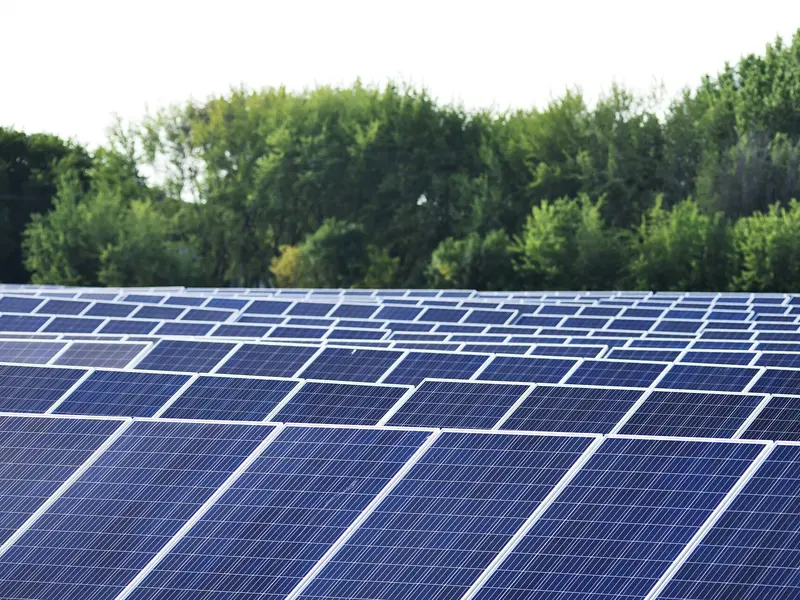
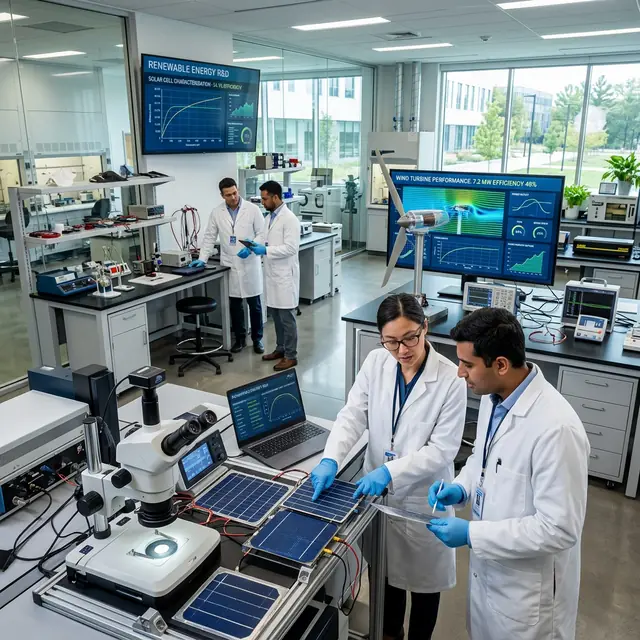
At ELECRO, ESG operates as a discipline for assessing risk and unlocking finance, not as a communications exercise. We apply the same methodological frameworks internally, in our own projects, and in our B2B advisory — from materiality assessment to the taxonomy alignment of solar projects.
Dual positioning
Why ESG now decides a project’s bankability
For institutional financiers (EBRD, EIB, IFC) and commercial banks, ESG performance is no longer a reputational bonus — it is an eligibility condition. A project without a proper impact study, without a biodiversity assessment or without taxonomy alignment risks being declared non-bankable, regardless of its energy yield.
ELECRO operates ESG on two mutually reinforcing planes. On the internal plane, it is the instrument for identifying environmental, social and governance risks early in our own EPC/EPCM projects, before they affect cost, schedule or bankability. On the external plane, it is an advisory service for developers, industrial prosumers and investors: structuring their reporting, calculating their footprint and demonstrating alignment with EU regulatory frameworks.
This dual positioning is verifiable: we cannot credibly deliver ESG advisory without applying the same standards at home. That is why every deliverable we propose to a client first passes through our own control process.
ESG as an eligibility and risk filter, not a communications exercise
The same methodological frameworks applied internally and in B2B advisory
Alignment with institutional financiers’ eligibility criteria
The classic E-S-G structure, translated into concrete activities for a solar integrator.
E
Environment
Environmental impact assessments (EIA), biodiversity evaluation and Natura 2000 protected-area management, carbon-footprint analysis of the project and of the equipment life cycle. The environmental component is the natural extension of our permitting and authorisation service.
S
Social
Supply-chain audit (due diligence on module and component suppliers, including forced-labour risk) and assessment of impact on local communities. On this pillar we commit to facilitating access to technical training and to jobs in renewable energy (installation, O&M, apprenticeship) for people from disadvantaged social backgrounds — capacity building translated into professional integration. Our Corporate Shared Value (CSV) model is the backbone of this commitment, aligned with SDG 4, 8 and 10.
G
Governance
A clear governance architecture and decision-making structure, regulatory compliance, anti-corruption policies and a whistleblowing mechanism in line with Romanian Law 361/2022. Governance is the pillar that makes the other two credible: without process, environmental and social reporting remain mere claims.
Regulatory alignment
The regulatory frameworks by which a sustainability report is assessed
We work with the exact standards by which a financier, an auditor or an authority assesses a sustainability report today, and we position each client in the correct reporting scope — without over-compliance and without gaps.
CSRD / ESRS
The Corporate Sustainability Reporting Directive and the European Standards (ESRS), built on the double-materiality principle — the company’s impact on the environment AND the impact of sustainability factors on the company. After the Omnibus package, many SME clients fall out of mandatory scope; we help them honestly distinguish obligation from voluntary reporting.
EU Taxonomy + DNSH
Solar electricity generation meets the substantial-contribution criterion for climate-change mitigation. The hard part is demonstrating the "Do No Significant Harm" (DNSH) criterion and the minimum safeguards. We communicate "taxonomy-aligned projects (TSC + DNSH)", not merely "sustainable".
ISO 14001 — environmental management
The international standard for environmental management systems. It provides the operational structure through which environmental ESG objectives become auditable procedures: identifying significant environmental aspects, controlling legal compliance and running the continual-improvement (PDCA) cycle. For an EPC integrator, it is the bridge between a stated commitment and the operational evidence required at audit and in financier due diligence.
GRI Standards
The Global Reporting Initiative standards, focused on impact materiality — the organisation’s effects on the economy, the environment and people. We apply the GRI-ESRS Interoperability Index to avoid duplicate reporting for clients reporting in parallel to global and European audiences.
SFDR
The Sustainable Finance Disclosure Regulation. Relevant for the funds and financiers investing in our clients’ projects: we provide the asset-level ESG data they need for their own classifications (Art. 8 / Art. 9).
VSME — voluntary reporting
The voluntary standard for SMEs, proportionate and simplified. For clients not mandatorily in CSRD scope, VSME offers a credible reporting framework without over-compliance — exactly the honest positioning we recommend.
UN 2030 Agenda
Contribution to the 2030 Agenda
ELECRO’s activity aligns with the Sustainable Development Goals (SDGs) directly applicable to a solar integrator, referencing the official UN targets — without unsupported claims.
SDG 7 — Affordable and Clean Energy
We develop and execute EPC/EPCM solar capacity (utility-scale, rooftop C&I, floating, prosumer) that adds renewable generation directly to the energy system. Target 7.2 — increasing the share of renewables in the mix; 7.3 — improving energy efficiency.
SDG 13 — Climate Action
Every MW of solar installed and operated displaces fossil-fuel generation, cutting the CO₂ emissions of our clients and of the system. Target 13.2 — integrating climate measures into policies, strategies and planning.
SDG 8 — Decent Work and Economic Growth
We create skilled technical jobs in construction and operation and apply HSE procedures on solar sites. Target 8.5 — full and productive employment and decent work; 8.8 — safe and secure working environments.
SDG 4 — Quality Education
We train staff in design, installation and O&M and commit to widening access to technical training for people from disadvantaged backgrounds. Target 4.4 — increasing the number of people with relevant technical and vocational skills for employment.
What we deliver
Concrete ESG advisory deliverables
ELECRO’s ESG advisory does not stop at diagnosis: every engagement produces documents presentable directly to a financier, auditor or regulator. We start from the organisation’s actual state and build a realistic roadmap, with deadlines and owners, not a facade of compliance.
For solar projects, we connect the environmental component of ESG directly with our permitting service: the environmental permit and the Natura 2000 appropriate assessment obtained during authorisation become the foundation of the taxonomy-alignment file.
We apply internally the same measurement frameworks we offer our clients. We never ask anyone to report what we do not measure ourselves, and we communicate numeric indicators only after methodological validation — no unvalidated figures.
Environmental indicators
We track operational carbon footprint and emissions avoided through delivered projects, expressed in tonnes of CO2 equivalent, based on recognised emission factors.
Social indicators
We monitor workforce structure, training (capacity-building) hours and supply-chain due-diligence coverage.
Governance indicators
We assess adopted policies (code of ethics, anti-corruption, whistleblowing), independence of the decision-making structure and degree of compliance.
Anti-greenwashing
An environmental claim stands on a metric, a methodology and independent verification
In the EU, greenwashing is no longer only a reputational risk but a legal and financing risk: a contestable report can block an entire bankability file. An environmental claim is therefore communicated only if it is quantified, attributed to a recognised methodology and verifiable by an independent third party.
We apply the rule in detail: "avoided emissions" are expressed in tonnes of CO2 equivalent, with explicit assumptions and emission factors; "taxonomy-aligned" means substantial-contribution criteria (TSC) plus DNSH demonstrated through documentation, not a marketing label.
No "100% green" or "zero impact" without a metric
A recognised methodology behind every figure
Claims verifiable by an independent third party
Turn ESG into a financing advantage
Whether you are preparing a bankability file or want a credible voluntary report, the ELECRO team maps the requirements and delivers the documents that matter.